Restore Your Home’s Comfort After a Complete System Failure
Facing an AC breakdown during the peak of summer heat creates immediate stress and safety concerns for your household, turning a standard day into a logistical crisis. Jims Air Systems provides rapid, precision-based technical solutions to restore your indoor climate control without unnecessary delays. Contact us immediately or apply for financing online to expedite your service and get a technician dispatched to your location.
When your cooling system fails, you need more than a quick patch; you need a verified resolution that addresses the root cause of the malfunction. Our team specializes in high-stakes HVAC interventions, ensuring that homeowners in the local service area receive industrial-grade support when they need it most. We prioritize technical accuracy and speed to mitigate the risks associated with prolonged heat exposure and humidity accumulation:
- Emergency Diagnostic and Repair: We deploy equipped technicians to identify the failure point and restore functionality immediately.
- System Longevity Assessments: Comprehensive inspections determine if the unit can be salvaged or requires modernization to prevent future breakdowns.
- High-Efficiency Implementations: We install systems designed to lower utility consumption while increasing cooling output.
- Full Compliance and Protection: All services are fully licensed, backed by manufacturer warranties, and accessible through flexible financing options.
Immediate Relief and Long-Term Performance Expectations
When you engage a professional service for air conditioning installation or critical repair, the objective is to secure a system that operates invisibly and efficiently. The modern HVAC landscape has shifted significantly, moving away from simple on/off cooling to variable-speed technologies and smart climate management. Homeowners often grapple with systems that run constantly but fail to cool, loud operational noises, or sudden spikes in energy bills. These are indicators of a system that has lost its thermodynamic efficiency or was arguably never sized correctly for the home’s thermal load.
Scope of service goes beyond merely dropping a new unit onto a concrete pad. A proper installation or major service event involves a holistic analysis of your home's envelope. This includes evaluating the ductwork for static pressure issues, checking insulation levels, and calculating the heat gain from windows and appliances. Without this data, a new unit may short-cycle, leading to premature compressor failure and uneven temperatures across different rooms.
We provide a transparent timeline and scope of work before any wrench is turned. You will understand exactly what components are being replaced, from the condenser outside to the evaporator coil and air handler inside. We also address the often-overlooked components such as refrigerant lines, drainage systems, and electrical disconnects. The goal is to ensure that once the system is active, it meets the specific SEER2 (Seasonal Energy Efficiency Ratio) standards promised by the manufacturer, delivering immediate comfort and measurable energy savings.
The Installation and Replacement Process
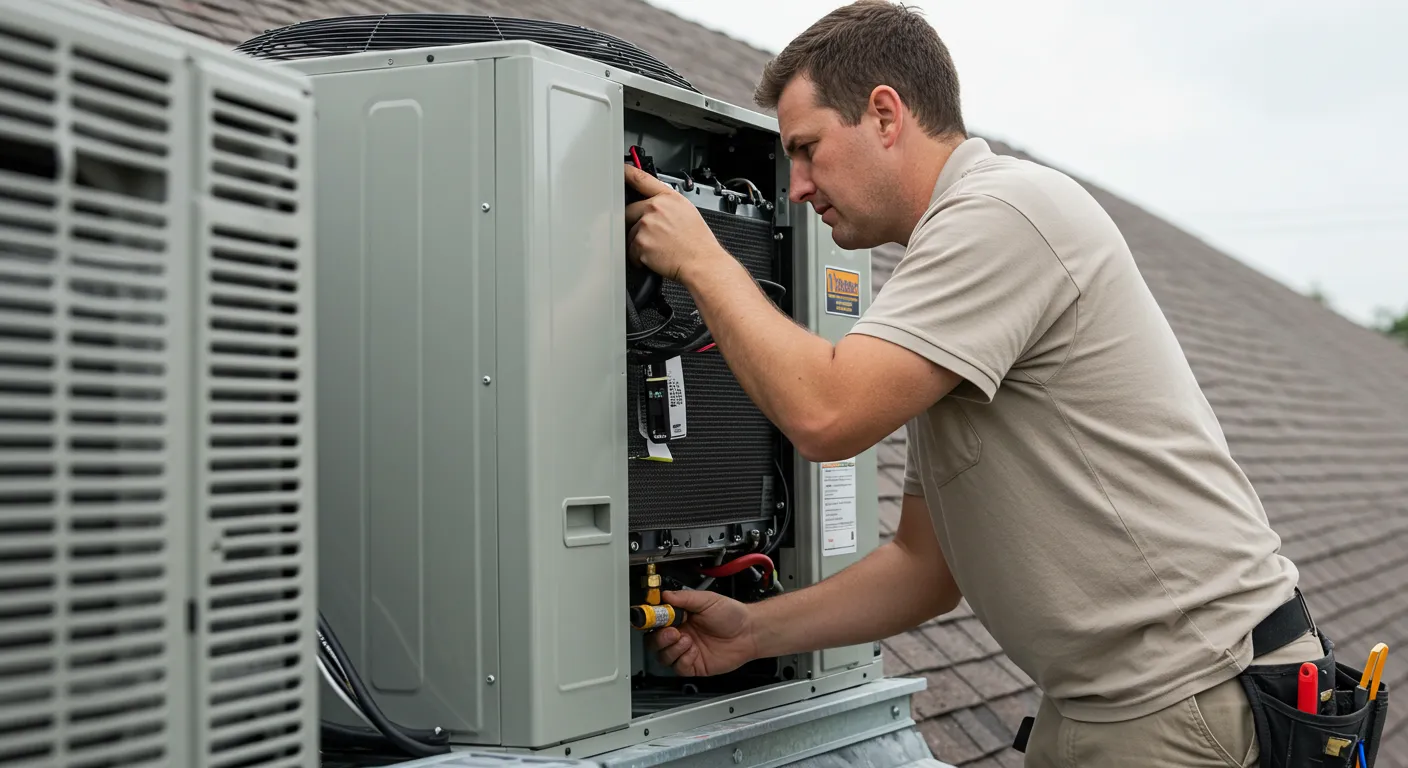
A high-quality AC installation is a sequence of precise technical steps. Skipping a single protocol, such as properly evacuating the lines or nitrogen purging during brazing, can reduce the lifespan of a new system by years. We adhere to a rigid installation methodology designed to meet manufacturer specifications and local building codes:
- Load Calculation and Sizing: The process begins with a Manual J load calculation. We measure the square footage, window orientation, insulation values, and local climate data to determine the exact tonnage required. An oversized unit will cool too quickly without dehumidifying, while an undersized unit will run perpetually. This calculation ensures the equipment is perfectly matched to the home's thermal requirements.
- Site Protection and Removal: Technicians prepare the workspace to protect flooring and landscaping. We safely recover existing refrigerants according to EPA guidelines to prevent environmental contamination. The old equipment is disconnected and removed, and the installation site is cleaned and leveled to ensure the new condenser sits on a stable, vibration-free foundation.
- Ductwork and Airflow Modification: Before the new unit is installed, we inspect the existing plenum and supply ducts. If the new system has higher airflow requirements, we modify the transitions to minimize static pressure. This step is critical for reducing noise and ensuring the blower motor does not overheat. We also seal visible leaks to prevent conditioned air from escaping into attics or crawlspaces.
- Equipment Installation and Brazing: The indoor evaporator coil and outdoor condenser are set in place. We connect the refrigerant lines using a brazing technique that flows nitrogen through the copper tubing. This prevents oxidation and soot buildup inside the lines, which could otherwise clog the sensitive expansion valves of modern high-efficiency units.
- Evacuation and Charging: Once connected, we use a vacuum pump to remove all moisture and air from the system, reaching a deep vacuum level measured in microns. This is essential for the longevity of the compressor. We then release the refrigerant and fine-tune the charge based on "subcooling" and "superheat" measurements, ensuring the system absorbs and rejects heat exactly as engineered.
- Final Commissioning and Testing: The system is powered on and tested across all modes of operation. We verify thermostat communication, measure temperature splits between supply and return air, and check amp draws on all motors. Only after the system passes this comprehensive commissioning checklist is the job considered complete.
Deciding Between Repair and Full Replacement
Homeowners frequently face the dilemma of whether to invest in a costly repair for an aging unit or to allocate those funds toward a new system. This decision should be based on data and financial logic rather than emotional urgency. There are specific thresholds where repair becomes a sunken cost that yields diminishing returns:
- The 50% Rule: A common industry benchmark is the 50% rule. If the cost of the repair approaches or exceeds 50% of the value of a new system, replacement is generally the wiser financial move. This is particularly true if the existing unit is out of warranty, as you are essentially investing in a depreciating asset with a high likelihood of subsequent failures.
- Refrigerant Compatibility: Older systems often utilize R-22 refrigerant, which has been phased out due to environmental regulations. Supplies of R-22 are limited and extremely expensive. If your system has a refrigerant leak and utilizes R-22, investing in a repair is rarely justifiable. Modern systems use R-410A or newer, more efficient refrigerants like R-454B or R-32, which are readily available and compliant with future standards.
- Frequency of Breakdowns: Consider the repair history over the last two years. If you have required multiple service calls for different components—such as a capacitor, then a fan motor, then a contactor—the system is demonstrating "nuisance breakdown" behavior. This usually signals that major components, like the compressor, are nearing the end of their lifecycle. Replacing the system halts this cycle of recurring expenses.
- Energy Efficiency Gaps: An AC unit installed 15 years ago likely has a SEER rating of 10 to 13. Modern base models start around 14.3 to 15 SEER2, with high-efficiency inverters reaching 20+ SEER. The difference in operational cost can be drastic. Replacing an old 10 SEER unit with a 16 SEER system can reduce cooling costs by 30% to 40%. In regions with long cooling seasons, these savings can offset the monthly cost of financing a new installation.
Navigating Local Climate Demands and Regulations
HVAC systems do not operate in a vacuum; they must fight the specific environmental conditions of the region. Whether your home is subjected to the humidity of the Northeast or the dry, blistering heat of the Southwest, the system setup must be calibrated to handle those loads. Additionally, regulatory compliance is non-negotiable for safety and resale value:
- Permitting and Inspections: Major HVAC installations and structural modifications typically require municipal permits. This ensures that the electrical connections meet fire codes and that the gas piping (for furnace combinations) is safe. We handle the administrative burden of pulling permits and scheduling required county or city inspections, ensuring your installation is fully legal and documented.
- Regional Efficiency Standards: The Department of Energy (DOE) enforces different minimum efficiency standards based on geography. The "North" and "South" regions have different SEER2 minimums. We ensure that any equipment we install meets or exceeds the federal requirements for your specific location, keeping you compliant and eligible for federal tax credits.
- Utility Rebates and Incentives: Local utility companies often offer rebates to homeowners who upgrade to high-efficiency heat pumps or air conditioners to reduce strain on the power grid. These programs change frequently. We assist in identifying available rebates and providing the necessary AHRI (Air-Conditioning, Heating, and Refrigeration Institute) certificates to help you claim these financial incentives.
- Humidity Control: In humid climates, simple cooling is not enough. A system must run long enough to pull moisture out of the air. If a system is oversized, it cools the air too fast and shuts off before dehumidification occurs, leading to a clammy indoor environment. We select equipment with proper latent heat capacity to manage local humidity levels effectively.
Operational Excellence and Technical Differentiators
Choosing a service provider is a decision on risk management. The quality of the installation is just as important as the brand of the equipment. A top-tier Carrier or Lennox unit will fail prematurely if the copper lines are kinked or the electrical connections are loose. Our approach is defined by technical rigor and a refusal to cut corners on the things you cannot see.
We employ technicians who are trained on the latest industry standards, including inverter-driven compressors and communicating thermostat systems. Our service vehicles are stocked with universal parts to resolve repairs on the first visit whenever possible. For installations, we utilize custom sheet metal fabrication when necessary to ensure airtight transitions between the new unit and your existing ductwork, preventing the 20-30% energy loss common in standard "box-swap" installations.
Jims Air Systems operates with a clear focus on data-driven results. We do not guess at airflow; we measure static pressure. We do not guess at refrigerant levels; we measure superheat. This commitment to precision ensures that your warranty remains valid and your system performs at the factory-rated specifications from day one.
Secure Your Comfort and System Reliability
A reliable air conditioning system is essential for maintaining a safe and comfortable home environment. Whether you are facing a critical breakdown requiring emergency repair or planning a strategic replacement to improve energy efficiency, the quality of the technical execution dictates the outcome. We provide the expertise, the certified processes, and the logistical support to resolve your HVAC challenges swiftly.
Don't let a compromised system threaten your comfort or drive up your energy costs. Take control of your indoor climate today.
Contact us now to schedule your diagnostic or installation consultation.

Your Trusted Local AC Experts
When the summer heat hits, you need an air conditioning system you can rely on. At Jim's Air Systems, we specialize in keeping your home cool and comfortable. Whether you need an emergency repair, a seasonal tune-up, or a brand new high-efficiency air conditioner, our family is here to help.
Our Air Conditioning Services include

AC Repair
We service all makes and models, quickly diagnosing and fixing any issue.
AC Installation & Replacement
Get a perfectly sized, high-efficiency system with our owner-led design and installation process.
AC Maintenance
Prevent breakdowns and improve efficiency with our comprehensive AC tune-ups.
Signs You Needs AC Service
.svg)
Ready for a Cooler, More Comfortable Home?
Whether you need an emergency repair or a free estimate on a new, energy-efficient air conditioner, our family is ready to provide honest advice and expert service. Contact us today!