Is Your Cooling System Failing to Keep Your Home Comfortable?
If your air conditioner has failed amidst Fremont’s summer heat, you are facing immediate physical discomfort and potentially unsafe conditions inside your home. Contact our team immediately or request service online to dispatch a technician to your location. Jims Air Systems provides rapid, reliable repairs to restore your comfort quickly, ensuring your system operates efficiently when you need it most.
- Same-day service availability ensures your AC is up and running without unnecessary delays.
- Licensed and insured technicians perform quality, compliant repairs on all major brands.
- Upfront pricing with no hidden fees allows you to make informed decisions before work begins.
All repairs are backed by a robust warranty to guarantee your satisfaction and protect your investment.
Immediate Solutions for Air Conditioning Failures
When a cooling system malfunctions, the priority is identifying the root cause and implementing a lasting fix. You do not need a sales pitch; you need a technician who can accurately diagnose the issue and restore cold air to your home. Professional AC repair services focus on triage, diagnosis, and rectification of mechanical and electrical failures.
Upon arrival, a certified technician performs a comprehensive evaluation of the system. This involves more than just checking if the unit turns on. The diagnostic process includes testing system pressures, measuring airflow, inspecting electrical connections, and verifying the integrity of the thermostat controls. Modern air conditioning systems are complex machines that rely on the synchronization of electrical signals, chemical phase changes, and mechanical movement. A failure in one component, such as a capacitor or a contactor, can cause the entire system to shut down to protect the compressor.
Homeowners in Fremont often encounter specific types of wear and tear due to the local climate. The dry heat places significant strain on capacitors and outdoor fan motors. During a service visit, the technician arrives with a fully stocked vehicle containing common parts such as run capacitors, contactors, hard start kits, and universal fan motors. This preparation allows for the completion of most repairs during the initial visit, eliminating the wait time for parts ordering.
The scope of repair covers the entire HVAC infrastructure. This includes clearing clogged condensate drain lines that trip safety float switches, repairing refrigerant leaks that cause coils to freeze, and replacing worn-out electrical components that prevent the unit from starting. The goal is to return the system to manufacturer specifications, ensuring it cools your home efficiently and reliably.
The Professional Repair Process
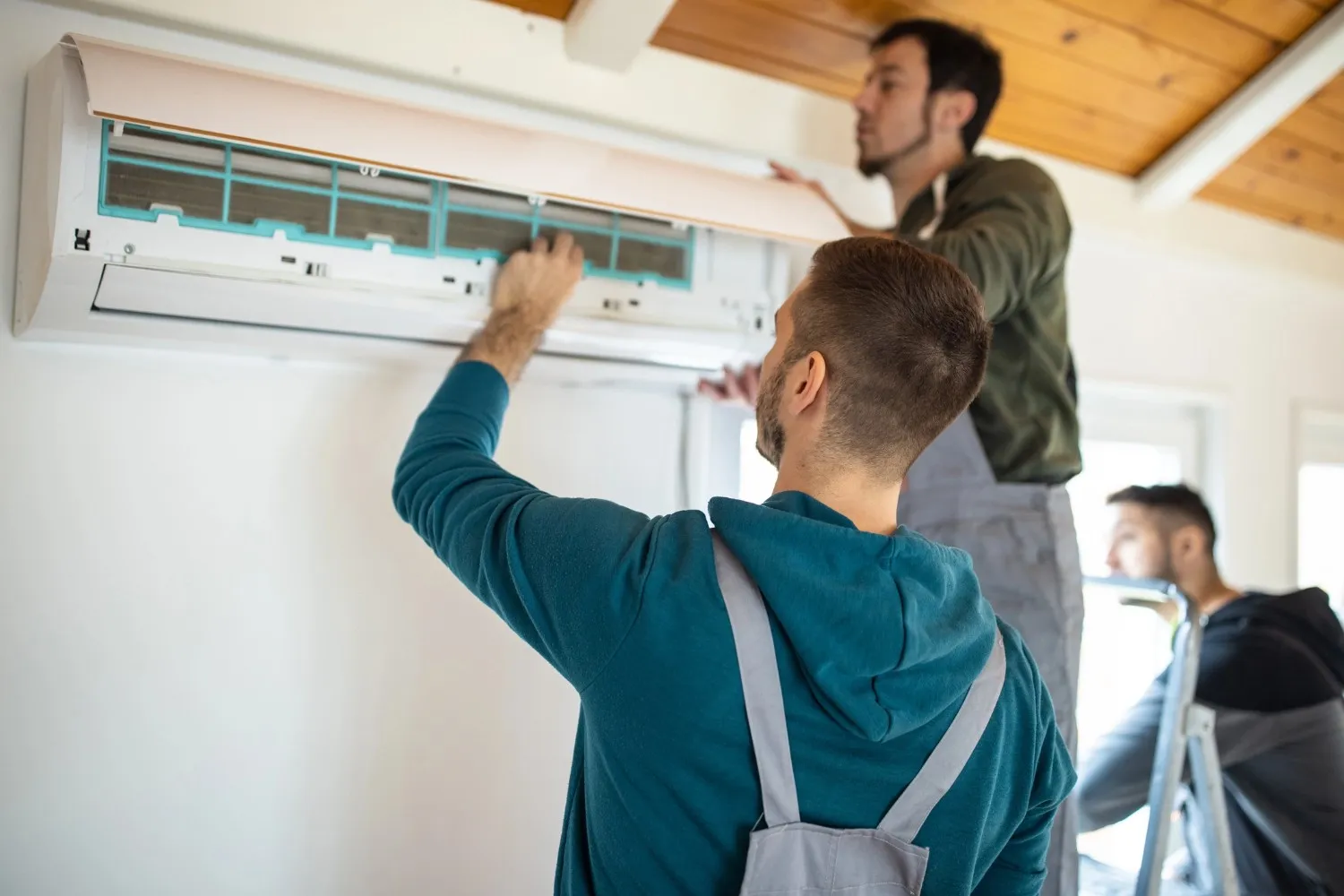
Understanding the sequence of events during a service call helps homeowners prepare and ensures transparency. Professional repair follows a strict protocol to ensure safety and accuracy.
- Initial Assessment and Safety Check: The technician begins by securing the work area and turning off power to the unit to prevent electrical shock. They listen to the homeowner’s description of the problem—whether it is a strange noise, warm air blowing from vents, or a complete system failure. This anecdotal evidence helps narrow down the potential issues.
- System Diagnostics: Using specialized tools like multimeters, manometers, and refrigerant gauges, the technician tests the system’s vital signs. They check the voltage and amperage draw of the compressor and motors. They measure the temperature drop across the evaporator coil to assess cooling efficiency. They also inspect the ductwork for major leaks or blockages that could be restricting airflow.
- Presentation of Findings and Quote: Once the issue is isolated, the technician explains the problem in clear, technical terms. You receive a detailed explanation of what failed, why it failed, and what options exist to fix it. A flat-rate price is provided for the repair, meaning the cost does not change regardless of how long the work takes. This quote is presented for approval before any repair work commences.
- Execution of Repairs: Upon approval, the technician proceeds with the repair. This may involve brazing a line set, replacing a circuit board, or chemically cleaning the coils. The technician adheres to all safety codes and environmental regulations, particularly regarding the handling and disposal of refrigerant.
- System Verification and Cleanup: After the repair is complete, the system is not just turned on; it is stress-tested. The technician monitors the system through a full cooling cycle to ensure the repair holds and that no secondary issues exist. Finally, the work area is cleaned, and the technician provides a service report detailing the work performed.
Deciding When to Repair vs. Replace Your AC Unit
A frequent dilemma homeowners face is determining whether to invest in a repair or allocate those funds toward a new system. While repair is often the most cost-effective immediate solution, there are specific thresholds where replacement becomes the smarter financial decision.
The "5000 Rule" is a standard industry metric used to guide this decision. Multiply the age of the unit by the estimated cost of the repair. If the total exceeds $5,000, replacement is generally recommended. For example, if a 12-year-old unit requires a $500 repair (12 x 500 = 6,000), the investment is likely better spent on a new system. Conversely, if a 5-year-old unit needs a $600 repair (5 x 600 = 3,000), repair is the logical choice.
- Age of the System: Air conditioners generally have a lifespan of 10 to 15 years. Units approaching or exceeding 15 years of age are running on borrowed time. Even if a repair is successful, the likelihood of a different component failing shortly after is high. For units under 10 years old, repair is almost always the correct path unless the compressor has failed.
- Refrigerant Type: Older systems utilizing R-22 (Freon) are becoming increasingly expensive to repair due to the phase-out of this refrigerant. If your system relies on R-22 and has a refrigerant leak, the cost to recharge the system may rival the cost of a down payment on a modern, R-410A or R-454B system.
- Frequency of Breakdowns: If you find yourself calling for service multiple times a season, the cumulative cost of repairs will quickly outpace the cost of a new unit. A system that requires frequent attention is unreliable and likely suffering from systemic wear that a single part replacement cannot resolve.
- Energy Efficiency Considerations: Older units often have SEER (Seasonal Energy Efficiency Ratio) ratings of 10 or 12. Modern standards require a minimum of SEER 14 or higher in California. Replacing an aging unit can result in significant reduction in monthly utility bills, which helps offset the cost of installation. However, if your current unit can be repaired to operate near its original efficiency, and it is not near the end of its life, repair remains the most prudent option to restore comfort immediately.
Critical Considerations for Fremont Homeowners
Operating an air conditioning system in the East Bay requires attention to specific environmental and regulatory factors. The local climate and building codes influence how repairs are conducted and how systems perform.
Local Climate Impact
While winters are mild, the summers are characterized by warm, dry heat with temperatures frequently reaching the 90s. This dry heat increases the evaporation rate, which can be beneficial for cooling but puts a heavy load on the condenser unit. Systems must work harder in the late afternoon to combat the heat gain in the home. This leads to a higher incidence of compressor overheating and capacitor failure during heatwaves. Additionally, the cool nights can sometimes mask a struggling system; homeowners may not realize the AC is underperforming until the midday heat spikes.
Permitting and Regulatory Compliance
In California, HVAC work is strictly regulated to ensure energy efficiency and safety. The California Building Standards Code (Title 24) dictates specific requirements for system alterations. While minor repairs typically do not require a permit, significant component replacements or alterations to the ductwork often do. Working with a licensed contractor ensures that all work remains compliant with local city codes. This protects the homeowner from liability and ensures the system meets current safety standards.
Electrical Infrastructure
Many older homes in the area may have outdated electrical panels that struggle to support modern, high-efficiency AC units alongside other appliances. During a repair, technicians inspect the electrical disconnect and the breaker to ensure they are sized correctly for the air conditioner's amperage requirements. Loose or corroded wiring is a common cause of intermittent failures and fire hazards, making electrical inspection a critical part of the repair process.
Refrigerant Management
Strict EPA regulations govern the handling of refrigerants to protect the ozone layer and reduce greenhouse gas emissions. Technicians must hold EPA Section 608 certification to legally buy and handle refrigerants. If your system requires a recharge, the technician must first locate and repair the leak; simply "topping off" a leaking system is a violation of EPA regulations and is environmentally irresponsible.
Technical Expertise and Component Analysis
High-quality AC repair goes beyond swapping parts; it involves a deep understanding of thermodynamics and electromechanical systems. When Jims Air Systems technicians address a failure, they analyze the interplay between components to prevent future breakdowns.
Compressor Analysis
The compressor is the heart of the system. Issues here often manifest as "hard starting," where the unit struggles to turn on, drawing excessive amperage. Technicians use testing equipment to measure the resistance of the windings inside the compressor. If the windings are shorted or grounded, the compressor must be replaced. However, often a hard start kit can be installed to assist the compressor, extending its life without the need for a full replacement.
Airflow and Static Pressure
Many cooling problems are actually airflow problems. If the evaporator coil is starved of air due to dirty filters or undersized ducts, the refrigerant cannot absorb heat, causing the coil to freeze. Technicians measure static pressure within the ductwork to determine if the system is "suffocating." Correcting airflow issues is essential for the longevity of the blower motor and the efficiency of the cooling cycle.
Electrical Controls and Safety Switches
Modern AC units are equipped with various safety switches designed to protect the equipment. High-pressure switches shut the unit down if the condenser fan fails, while low-pressure switches prevent the compressor from running without refrigerant. Diagnosing a "dead" unit often involves tracing the low-voltage control circuit to find which safety switch has opened. This pinpoint accuracy prevents unnecessary part replacements.
Condensate Management
The cooling process naturally dehumidifies the air, producing water that must be drained away. If the drain line becomes clogged with algae or debris, water can back up and overflow, causing water damage to the home. Technicians clear these lines using compressed nitrogen or vacuums and verify that the condensate pump (if present) is functioning correctly.
Restoring Your Home Comfort
Ignoring the signs of a failing air conditioner usually leads to more expensive repairs or a total system collapse during the hottest days of the year. Whether it is a strange vibration, a lack of cold air, or a complete system shutdown, prompt professional attention is required to secure your indoor environment.
The goal of every service call is to leave the system running safer, cleaner, and more efficiently than it was found. By utilizing diagnostic precision and high-quality replacement parts, the lifespan of the equipment is extended, and the risk of future emergencies is minimized. Jims Air Systems is dedicated to providing the technical expertise required to solve complex HVAC challenges. Do not let a broken air conditioner compromise your safety or quality of life — contact us today.

Your Trusted Local AC Experts
When the summer heat hits, you need an air conditioning system you can rely on. At Jim's Air Systems, we specialize in keeping your home cool and comfortable. Whether you need an emergency repair, a seasonal tune-up, or a brand new high-efficiency air conditioner, our family is here to help.
Our Air Conditioning Services include

AC Repair
We service all makes and models, quickly diagnosing and fixing any issue.
AC Installation & Replacement
Get a perfectly sized, high-efficiency system with our owner-led design and installation process.
AC Maintenance
Prevent breakdowns and improve efficiency with our comprehensive AC tune-ups.
Signs You Needs AC Service
.svg)
Ready for a Cooler, More Comfortable Home?
Whether you need an emergency repair or a free estimate on a new, energy-efficient air conditioner, our family is ready to provide honest advice and expert service. Contact us today!