Restore Heat to Your Home Quickly and Reliably
Discovering your furnace is down in the middle of a chilly, wet winter night is a stressful experience that demands immediate attention. When the temperature drops and your heating system fails to respond, you need professional, responsive furnace repair services to restore comfort to your home without delay. Contact us immediately to schedule a diagnostic visit and get your system running again.
We understand that heating emergencies rarely happen at convenient times. A functioning furnace is not just a matter of comfort; it is a matter of safety for your family and plumbing systems. Our approach focuses on rapid deployment and accurate diagnostics to minimize downtime.
- Fast repairs—most jobs are diagnosed and completed in just one visit due to fully stocked service vehicles.
- Comprehensive troubleshooting—technicians identify the root cause, not just the symptom.
- Decades of expertise—servicing residential heating systems for homeowners in Dublin.
- Fully licensed and compliant with local codes for your peace of mind.
Jims Air Systems provides the technical skill required to handle high-efficiency units, older gas furnaces, and modern heating arrays. Whether you are dealing with a complete system shutdown, strange noises, or lukewarm airflow, professional intervention ensures your heat is restored safely.
What to Expect From Your Furnace Repair Service
When you request service, the priority is efficient identification of the mechanical or electrical failure. Modern furnaces are complex machines involving control boards, gas valves, and safety sensors. A professional repair service does not rely on guesswork; it relies on a systematic evaluation of the entire heating envelope.
Upon arrival, the technician’s goal is to isolate the component causing the failure. This often involves checking the thermostat communication, verifying high-voltage and low-voltage electrical connections, and inspecting the fuel supply lines. Residents in Dublin often face issues related to ignition systems or airflow restrictions that trigger safety lockouts.
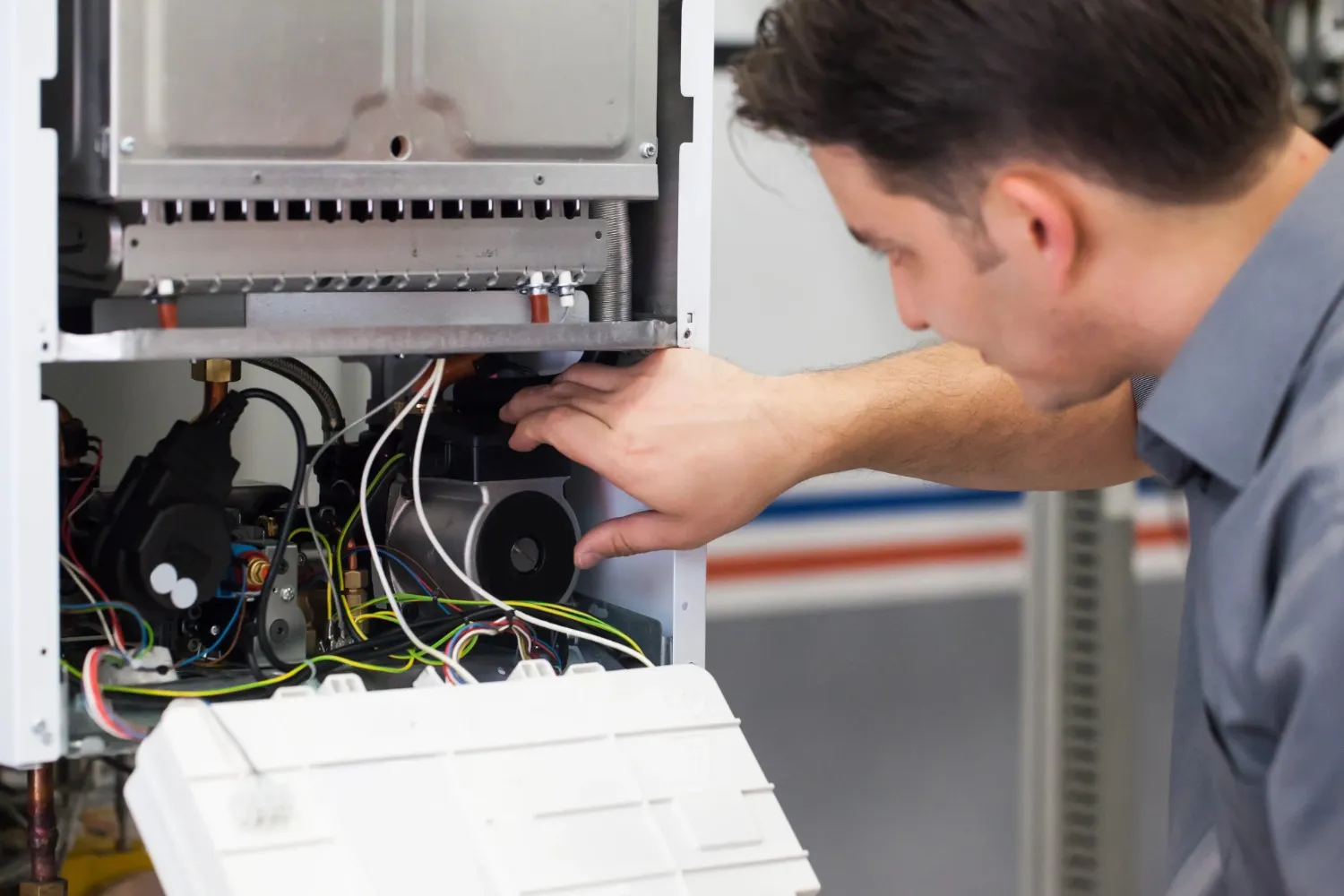
Comprehensive Component Inspection
A thorough repair visit includes a detailed check of the critical components that drive your heating system:
- Ignition Systems: The technician tests the hot surface ignitor or pilot assembly. If the system fails to light, this is the first checkpoint. Resistance tests determine if the ignitor has cracked or worn out.
- Flame Sensors: Over time, oxidation builds up on flame sensors, causing the furnace to shut down after a few seconds of operation. Cleaning or replacing this sensor is a common repair.
- Blower Motors and Capacitors: If the furnace hums but does not blow air, the issue often lies with the blower motor or its run capacitor. Technicians test microfarad readings to see if the capacitor is within range or needs replacement.
- Inducer Motors: This small motor clears exhaust gases before ignition. If it fails, the pressure switch will not close, and the furnace will not start.
- Heat Exchangers: This is a critical safety check. Technicians inspect the heat exchanger for cracks or corrosion that could allow carbon monoxide to leak into the supply air.
Timeline for Repairs
Most furnace repairs are resolved within hours of the technician’s arrival. Because service trucks are stocked with universal parts—such as pressure switches, control boards, transformers, and ignitors—there is rarely a need to order parts for standard units. However, for specialized proprietary parts found in high-end modulating furnaces, a sourcing period may be required. You will be provided with a clear timeline immediately following the diagnostic phase.
How the Furnace Repair Process Works
Professional HVAC repair follows a rigid protocol to ensure safety and accuracy. This process is designed to protect your home from gas leaks and electrical hazards while ensuring the repair holds up against future cold snaps.
- Initial Assessment and Safety Check: The process begins with a conversation about the symptoms you noticed (e.g., smells, sounds, cycle length). The technician then performs a safety sweep, checking for gas leaks around the service valve and testing ambient carbon monoxide levels to ensure the environment is safe to work in.
- System Diagnostics: Using multimeters and manometers, the technician tests electrical voltage and gas pressure. They will cycle the thermostat to observe the "sequence of operation." This sequence—draft inducer start, pressure switch close, ignitor glow, gas valve open, flame proof, blower on—tells the technician exactly where the chain of command is breaking.
- Root Cause Analysis: Identifying the broken part is only half the battle. If a blower motor failed, the technician determines why it failed. Was it due to a clogged filter causing high static pressure? Was it a voltage spike? Addressing the root cause prevents the new part from failing prematurely.
- Quote and Authorization: Before any wrench is turned for the repair, you receive a flat-rate quote. This price includes parts, labor, and taxes. There are no hourly billing surprises; the price reflects the specific job required to fix the heating system.
- Execution of Repair: The technician isolates power and gas, removes the faulty component, and installs the replacement. All wiring is secured, and gas connections are soap-tested to ensure a perfect seal.
- Performance Testing: Once the repair is complete, the system is not just turned on; it is tested. Temperature rise (the difference between return air and supply air temperature) is measured to ensure the furnace is operating within manufacturer specifications. This confirms the system is not overheating or underperforming.
Deciding Between Repair and Replacement
Homeowners frequently face the dilemma of whether to invest in a repair or opt for a full system replacement. This decision should be based on data, safety, and financial logic, not sales pressure. While our goal is always to repair first, there are scenarios where a repair is merely a temporary patch on a dying system.
- The 50% Rule: A common industry standard is the "50% Rule." If the cost of the repair approaches 50% of the cost of a new system, replacement is generally the wiser financial move. However, this rule must be weighed against the age of the unit.
- Age of the Equipment: Furnaces typically last between 15 and 20 years. If your unit is in Dublin and is over 15 years old, parts may be becoming obsolete. A major failure in an aging unit (like a failed compressor or cracked heat exchanger) usually signals the end of the unit's useful life. Conversely, a 10-year-old unit is usually worth repairing unless the damage is catastrophic.
- Safety Concerns: Safety is the non-negotiable factor. If a technician discovers a cracked heat exchanger, the furnace must be shut down immediately due to the risk of carbon monoxide poisoning. In this scenario, replacement is almost always the only safe option, as replacing a heat exchanger is labor-intensive and costly, often rivaling the price of a new unit.
- Frequency of Breakdowns: If you have required repairs multiple times in the last two years, the system is likely suffering from systemic failure. Constant repairs—replacing a blower one month, a gas valve the next—quickly exceed the monthly cost of financing a new, high-efficiency system.
- Energy Efficiency: Older furnaces often operate at 60% to 70% AFUE (Annual Fuel Utilization Efficiency). This means 30 to 40 cents of every dollar you spend on gas goes up the flue pipe. Modern systems operate at 80% to 98% efficiency. If your energy bills are skyrocketing despite moderate usage, the long-term savings of a new unit might justify skipping a costly repair on an inefficient legacy unit.
Local Considerations for Heating Systems
Operating a furnace in the Tri-Valley area comes with specific environmental and regulatory considerations that impact how repairs and maintenance are handled.
Climate and Seasonality
The local climate is Mediterranean, characterized by wet, mild winters and hot, dry summers. While winters are not arctic, the dampness can be penetrating. This moisture can lead to corrosion on electrical contacts and circuit boards if the furnace is located in a garage or unconditioned attic. Furthermore, because furnaces sit idle for many months during the long, hot summer, they often accumulate dust and debris on the burners. This accumulation is the primary cause of "delayed ignition" or burning smells when the system is fired up for the first time in late autumn.
Permits and Regulations
In Dublin, CA, major HVAC work—specifically system replacements and significant alterations—requires adherence to Title 24 energy standards and local building codes. While minor repairs (like swapping a capacitor) do not typically require a permit, replacing a furnace does. Licensed professionals ensure that any work performed meets the strict safety standards regarding gas line sizing, flue venting clearances, and electrical grounding. Jims Air Systems ensures strict adherence to these codes to protect your home’s value and insurance compliance.
Utility Integration
Most heating systems in the area are natural gas-fired and supplied by PG&E. Repair services often involve checking gas pressure to match the specific calorific value supplied to the home. Incorrect gas pressure can lead to soot buildup, poor efficiency, and overheating. Local technicians are familiar with the specific gas pressure requirements for the region to ensure optimal combustion.
Technical Precision and Diagnostics
The difference between a quick fix and a lasting solution lies in the diagnostic equipment and technical training utilized during the service call. Modern furnaces are equipped with self-diagnostic control boards that emit LED flash codes. However, these codes only point to the circuit that halted the operation; they do not diagnose the external cause.
For example, a "Limit Switch Open" code indicates the furnace overheated. A novice might simply replace the limit switch. A professional understands the switch did its job by detecting heat; the real problem is likely restricted airflow, a blocked filter, or a dirty blower wheel. We focus on these nuances to prevent recurring issues.
- Manometer Testing: We verify gas manifold pressure to ensure the burner flame is not too strong (overheating the metal) or too weak (causing condensation).
- Temperature Rise Checks: We measure the air temperature entering and leaving the furnace to verify the heat exchanger is transferring thermal energy correctly.
- Carbon Monoxide Analysis: We utilize sensitive electronic detectors to sniff for CO leaks that are undetectable by standard household alarms.
- Electrical Draw Testing: We measure the amperage draw of motors to predict failures before they happen. A motor drawing amps above its rating is on the verge of burning out.
Why Professional Service Matters
Attempting DIY furnace repair is dangerous. Modern units run on high voltage and combustible gas. A mistake in wiring can fry a circuit board, and a mistake in gas piping can be catastrophic. Professional technicians carry the liability, the tools, and the experience to handle these risks.
When you hire a professional service, you are paying for the assurance that the correct part is installed correctly. Universal parts sold online may fit physically but lack the correct specifications for your specific model, leading to safety lockouts or reduced efficiency. Professional trucks carry OEM (Original Equipment Manufacturer) or equivalent parts that meet the exact engineering standards of your furnace brand.
Furthermore, professional service includes a warranty on labor and parts. If the repair fails within the warranty period, you are covered. This protection is absent in DIY attempts or handyman services. We provide clear documentation of the work performed, which is vital for maintaining the manufacturer's warranty on your equipment.
Restoring Comfort to Your Home
A broken furnace disrupts your life and threatens the comfort of your home. You do not have to endure the cold or wait days for a solution. We provide the expertise, the parts, and the local knowledge required to get your heat back on efficiently. Don't let a heating failure linger. Secure your comfort and safety with a professional diagnostic and repair service today. Schedule your furnace repair now.
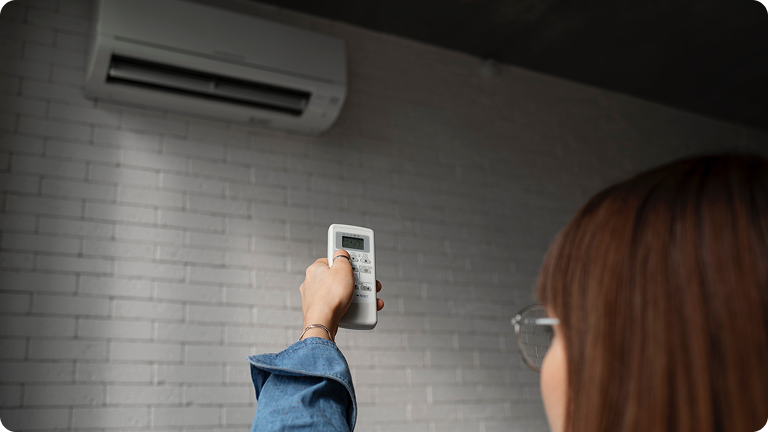

Your Trusted Local AC Experts
When the summer heat hits, you need an air conditioning system you can rely on. At Jim's Air Systems, we specialize in keeping your home cool and comfortable. Whether you need an emergency repair, a seasonal tune-up, or a brand new high-efficiency air conditioner, our family is here to help.
Our Air Conditioning Services include

AC Repair
We service all makes and models, quickly diagnosing and fixing any issue.
AC Installation & Replacement
Get a perfectly sized, high-efficiency system with our owner-led design and installation process.
AC Maintenance
Prevent breakdowns and improve efficiency with our comprehensive AC tune-ups.
Signs You Needs AC Service
.svg)
Ready for a Cooler, More Comfortable Home?
Whether you need an emergency repair or a free estimate on a new, energy-efficient air conditioner, our family is ready to provide honest advice and expert service. Contact us today!