
Is Your Ductless System Failing to Maintain Comfort?
Is your Concord home’s comfort compromised by a malfunctioning ductless unit right when you need it most? When your mini-split system fails to cool down a hot living room or heat a bedroom, you need reliable and swift repair services tailored to address and resolve your specific problems immediately; contact us now to schedule your diagnostic visit. Jims Air Systems specializes in restoring complex ductless technology to peak performance without unnecessary delays.
- Experienced technicians respond within hours to restore functionality.
- Same-day service ensures your comfort isn’t disrupted during extreme weather.
- Transparent pricing provided upfront with no hidden fees or surprises.
Accredited service with full warranty and competitive financing options available.
Immediate Diagnosis and Repair Scope
When a ductless mini-split system malfunctions, the issue often stems from complex inverter technology or sensitive electronic components rather than simple mechanical failures found in traditional HVAC units. Homeowners in Concord need a technician who understands the specific error codes and operational logic of brands like Mitsubishi, Daikin, Fujitsu, and LG. The primary goal of a service visit is to accurately identify the root cause of the failure—whether it is a communication error between the indoor and outdoor units, a refrigerant leak, or a failed control board—and implement a lasting fix.
Upon arrival, a professional technician focuses on a comprehensive diagnostic process. This is not a superficial check; it involves testing electrical voltage, amperage, and resistance across the inverter boards and compressor. Because ductless systems rely heavily on sensors to modulate temperatures, even a minor calibration issue with a thermistor can shut down the entire system. Technicians arrive with fully stocked service vehicles containing universal parts and brand-specific components to maximize the likelihood of a repair being completed on the very first visit.
The scope of repair services covers every component of the system. This includes the outdoor condenser unit, the indoor air handling units (heads), and the line sets connecting them. Addressing issues such as water leaking from the indoor unit due to clogged condensate lines or addressing distinct grinding noises caused by blower wheel imbalances are standard procedures. The objective is to move from a state of disruption to full operational capacity within a single service window whenever possible.
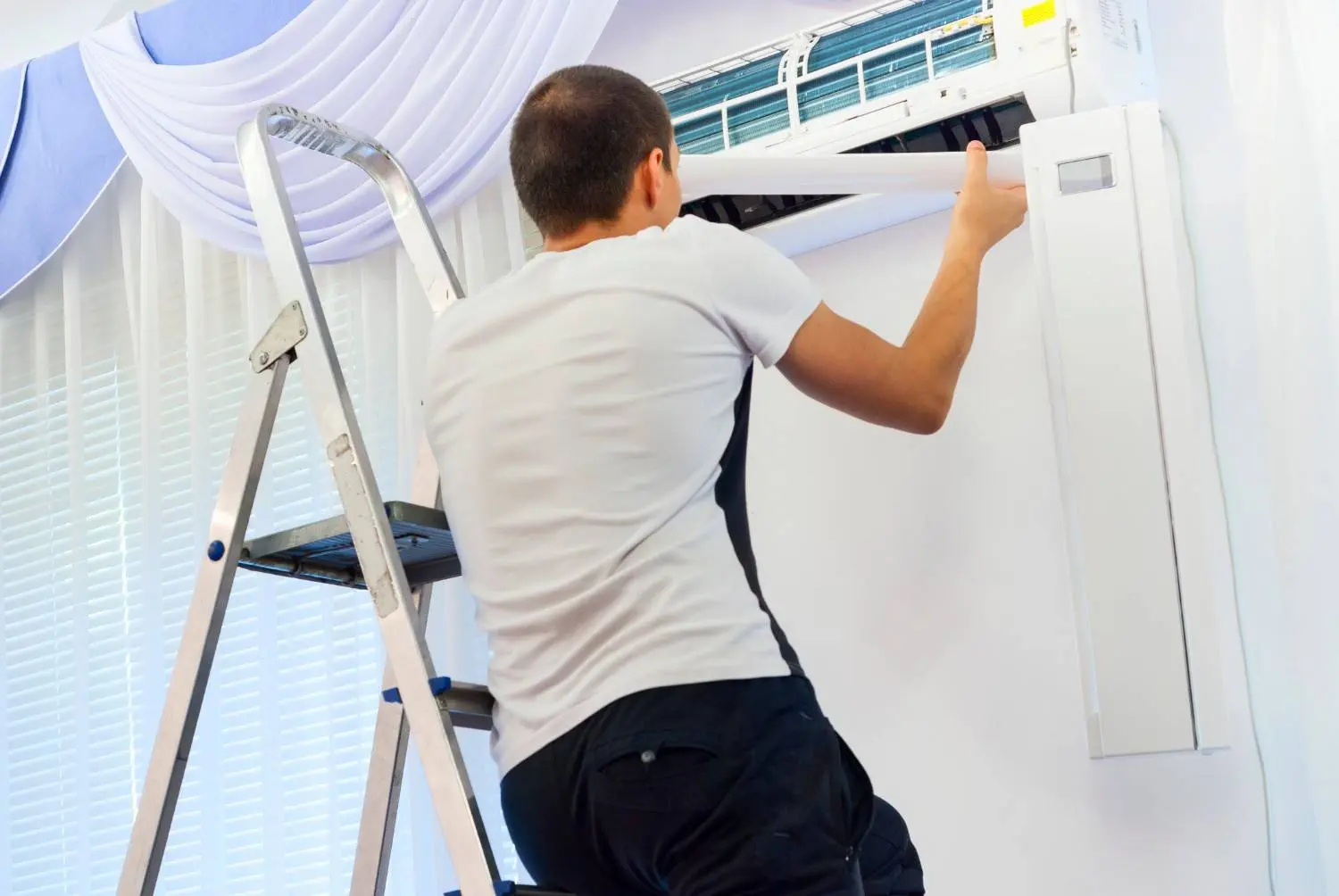
The Ductless Repair Process: Step-by-Step
Understanding what happens during a repair appointment helps alleviate the stress of a breakdown. Professional service providers follow a rigorous, standardized protocol to ensure safety and quality. This process is designed to be transparent, keeping the homeowner informed at every critical decision point.
Initial Assessment and Error Code Retrieval
The technician begins by communicating with the unit’s onboard computer. Unlike central air systems, ductless units usually provide specific error codes via flashing lights or remote control displays. The technician deciphers these codes to pinpoint the general area of failure, whether it is high pressure, low voltage, or a sensor fault.
Electrical and Mechanical Testing
Once the error code provides a direction, the technician uses specialized tools like multimeters and manometers. They verify the electrical connections at the terminal block to ensure power is reaching the unit correctly. They also test the refrigerant pressures. Since ductless systems are critically charged, meaning the exact amount of refrigerant is vital for operation, any deviation suggests a leak that must be located and sealed.
Component Isolation and Verification
If a specific part is suspected, such as the outdoor main control board or the compressor, the technician isolates that component to test it individually. This prevents misdiagnosis. For example, a bad reactor can sometimes mimic a bad compressor; testing them separately saves the homeowner from paying for expensive parts that aren’t actually broken.
Quoting and Authorization
Before any wrench is turned for the actual repair, the technician provides a clear, flat-rate quote. This outlines exactly what is wrong, what part is needed, and the total cost of labor and materials. Work only proceeds once you have authorized this specific scope.
Execution of Repair and System Cleaning
The technician replaces the faulty component or repairs the wiring issue. During this phase, they also inspect the system for cleanliness. If a blower wheel is impacted with dust or mold, it can cause vibration and reduced airflow. Cleaning these components is often part of the repair to ensure the new part doesn't fail prematurely.
Final Testing and Calibration
After the repair is complete, the system is run through a full test mode. The technician measures the temperature differential (delta T) between the intake air and the discharge air to ensure the unit is cooling or heating efficiently. They also check the drainage system to ensure condensate is flowing freely away from the home.
Deciding Between Repair and Replacement
Homeowners often face a difficult decision when an older ductless system breaks down: is it worth investing in another repair, or is it time to upgrade to a new unit? While Jims Air Systems prioritizes repair whenever it is economically feasible, there are mathematical and practical thresholds where replacement becomes the smarter financial move. Making this decision requires analyzing the age of the unit, the cost of the current repair, and the system's recent performance history.
The 50% Rule
A general industry standard is the 50% rule. If the cost of the repair approaches or exceeds 50% of the cost of a brand-new system, replacement is generally the better option. This is especially true if the warranty on the existing unit has expired. Spending half the cost of a new machine on an old machine that might break again in six months is rarely a good investment.
System Age and R-410A Availability
Most quality ductless systems last between 12 and 15 years. If your unit is approaching the 15-year mark, parts availability may become an issue. Additionally, older units may use refrigerants that are becoming more expensive or phased out. If a compressor fails on a 14-year-old unit, the labor and part cost will likely outweigh the value of the remaining service life.
Frequency of Breakdowns
If you have required multiple repairs in the last two years, the system is likely entering the end of its failure curve. "Nickel and diming" refers to the situation where small components fail in succession—first a fan motor, then a board, then a sensor. If reliability has become a constant worry, a new system with a fresh 10-12 year warranty provides peace of mind that a repair cannot offer.
Efficiency Degradation
Over time, compressors wear down and heat exchangers corrode, leading to a drop in efficiency. If you have noticed your energy bills creeping up despite regular usage, the unit may be working twice as hard to provide the same amount of cooling. Newer systems offer significantly higher SEER (Seasonal Energy Efficiency Ratio) ratings, which can offset the cost of installation through monthly energy savings.
Common Technical Failures in Mini-Split Systems
Ductless systems are engineering marvels, but their complexity leads to specific types of failures that differ from standard central air conditioning. Understanding these specific failure points can help homeowners articulate issues when calling for service.
Communication Errors
The indoor and outdoor units must constantly "talk" to each other via a dedicated communication wire. Power surges, loose connections, or rodent damage to the wire can disrupt this signal. When communication is lost, the system will completely shut down to protect itself, often displaying a specific error code regarding transmission failure.
Condensate Drainage Issues
Because the indoor units are mounted on walls inside the living space, water management is critical. The moisture removed from the air must drain via gravity or a pump. Algae growth or dust buildup can clog the drain line, causing water to back up and drip down the wall. In some cases, a failed condensate pump will trigger a safety switch that prevents the unit from turning on.
Refrigerant Leaks at Flare Connections
Ductless systems use flare connections rather than brazed (welded) joints at the unit connection points. These flares can loosen over time due to thermal expansion and contraction or vibration. A slow leak will eventually cause the system to freeze up (ice on the coils) or blow warm air when set to cool. Locating and re-flaring these connections is a standard repair procedure.
Inverter Board Failures
The inverter board is the brain of the system, converting AC power to DC power to modulate the compressor speed. These boards are sensitive to "dirty" power or voltage spikes. If a board fails, the compressor will not run, or the fans may operate erratically. Replacing a board requires precision and handling to ensure the new component isn't damaged during installation.
Local Climate Factors Impacting Systems in Concord
Operating a ductless system in Concord presents unique challenges due to the local Mediterranean climate. The region experiences mild, wet winters and hot, dry summers. This seasonality directly dictates how HVAC equipment wears down and what maintenance is required to prevent failure.
High Cooling Demand in Summer
Concord summers are notoriously dry and hot, often reaching triple digits. This places an immense strain on the compressor and the outdoor condenser coil. The system must run at high capacity for extended periods to maintain indoor comfort. This sustained high-load operation is typically when capacitors fail or compressors overheat if the system has not been kept clean.
Particulate Matter and Wildfire Smoke
The dry season in this part of California often coincides with increased dust and, unfortunately, wildfire smoke. Ductless indoor units have fine mesh filters that can clog rapidly when air quality is poor. A clogged filter restricts airflow, causing the coil to freeze and the system to shut down. Regular professional cleaning of the blower wheel and coil is essential in this geographic area to maintain efficiency.
Winter Moisture and Defrost Cycles
While winters are mild, the humidity and rain between November and March can affect the outdoor heat pump. In heating mode, the outdoor unit may frost over. The system initiates a defrost cycle to melt this ice. If sensors are faulty or the outdoor unit is blocked by debris, the defrost cycle may fail, leaving the unit encased in ice and unable to heat the home.
Permitting and Electrical Codes
Local building codes in the Contra Costa area regarding electrical safety and HVAC alterations are strict. Repairs involving electrical circuits or refrigerant handling must adhere to safety standards. Professional technicians ensure that any major component replacement complies with local regulations, ensuring the safety of the home and the validity of insurance coverage.
Why Professional Execution Matters
Choosing the right service provider for ductless repair involves looking for specific qualifications. Ductless systems are not "plug and play" for general handymen; they require specialized training.
Specialized Diagnostic Tools
Proper repair requires tools that general HVAC techs may not carry, such as flare nut torque wrenches to prevent leaks and inverter phase testers. Using the wrong tools can strip connections or fry electronic boards.
NATE-Certified Technicians
North American Technician Excellence (NATE) certification indicates a technician has passed rigorous testing on real-world working knowledge of HVAC systems. This certification is a hallmark of a technician who understands the theory behind the repair, not just parts changing.
Access to OEM Parts
Ductless systems are proprietary. A generic universal motor often will not work in a Mitsubishi or Fujitsu unit. Professional service providers have supply chain access to Original Equipment Manufacturer (OEM) parts, ensuring that the replacement part fits perfectly and operates according to the manufacturer's specifications.
Warranty Preservation
Most manufacturer warranties are contingent on the equipment being serviced by a licensed professional. DIY repairs or repairs by unlicensed individuals can void the warranty, leaving the homeowner responsible for the full cost of future failures.
Restoring Your Comfort
A broken ductless system is more than an inconvenience; it disrupts the livability of your home. Whether you are dealing with a water leak, a system that won't turn on, or lackluster cooling performance, immediate action is required. We focus on diagnosing the issue accurately the first time and providing lasting solutions that respect your time and budget.
Do not let a minor malfunction turn into a total system failure. Secure your investment and your indoor climate by relying on experts who understand the intricacies of ductless technology. For rapid response and expert ductless repair in Concord, call Jims Air Systems today to schedule your service.

Your Trusted Local AC Experts
When the summer heat hits, you need an air conditioning system you can rely on. At Jim's Air Systems, we specialize in keeping your home cool and comfortable. Whether you need an emergency repair, a seasonal tune-up, or a brand new high-efficiency air conditioner, our family is here to help.
Our Air Conditioning Services include

AC Repair
We service all makes and models, quickly diagnosing and fixing any issue.
AC Installation & Replacement
Get a perfectly sized, high-efficiency system with our owner-led design and installation process.
AC Maintenance
Prevent breakdowns and improve efficiency with our comprehensive AC tune-ups.
Signs You Needs AC Service
.svg)
Ready for a Cooler, More Comfortable Home?
Whether you need an emergency repair or a free estimate on a new, energy-efficient air conditioner, our family is ready to provide honest advice and expert service. Contact us today!