
Is Your Ductless System Failing to Keep Up with the Heat?
When your ductless unit starts blowing warm air, leaking water, or making grinding noises during a Concord heatwave, you need immediate resolution to protect your home’s comfort. Call us or contact us online to schedule a diagnostic visit and explore our financing options today.
A malfunctioning mini-split does more than just raise the temperature; it often signals electrical issues or refrigerant leaks that can damage the compressor if left unchecked. We provide swift, accurate assessments to determine exactly why your system is failing and implement a fix that lasts.
- Same-day troubleshooting to restore your comfort fast.
- Upfront quotes with no surprise fees on the final bill.
- Certified technicians equipped to handle all major mini-split brands.
All repair work is backed by comprehensive labor warranties, with clear upfront pricing and available financing to minimize the stress of unexpected breakdowns.
Immediate Diagnostics and Comprehensive Repair Scope
When a technician arrives at your property, the primary goal is to isolate the root cause of the failure rather than simply swapping out parts. Ductless mini-splits are sophisticated pieces of equipment that rely on complex communication between the indoor air handler and the outdoor condenser. A failure in one component often triggers symptoms in another. The service focuses on identifying whether the issue lies in the control board, the refrigerant lines, or the power supply.
Homeowners in this region often face specific issues due to the oscillation between high heat and cooler evenings. Common repairs handled immediately include:
- Refrigerant Leak Detection and Recharge: Low refrigerant levels often indicate a leak in the line set or flare connections. Technicians use electronic leak detectors to pinpoint the escape point, repair the connection, and recharge the system to factory specifications.
- Control Board Replacement: Mini-splits rely heavily on inverter technology and printed circuit boards (PCBs). Power surges or age can cause these boards to fail, disrupting communication between the indoor and outdoor units.
- Condensate Drain Clearing: If water is dripping down your wall, the condensate line is likely clogged with algae or debris. The service includes clearing the blockage and treating the line to prevent future backups.
- Blower Wheel Cleaning and Repair: Dust and mold buildup on the blower wheel can unbalance the fan, causing noise and reducing airflow. Deep cleaning or bearing replacement restores quiet operation.
- Sensor Recalibration: Thermistors and sensors dictate how hard the unit works. If these are reading incorrect temperatures, the system will short-cycle or run continuously without cooling.
Jims Air Systems ensures that every service truck is stocked with universal parts and diagnostic tools specific to inverter-driven systems. This preparation minimizes the need for follow-up visits and ensures that common electrical and mechanical failures are resolved on the spot.
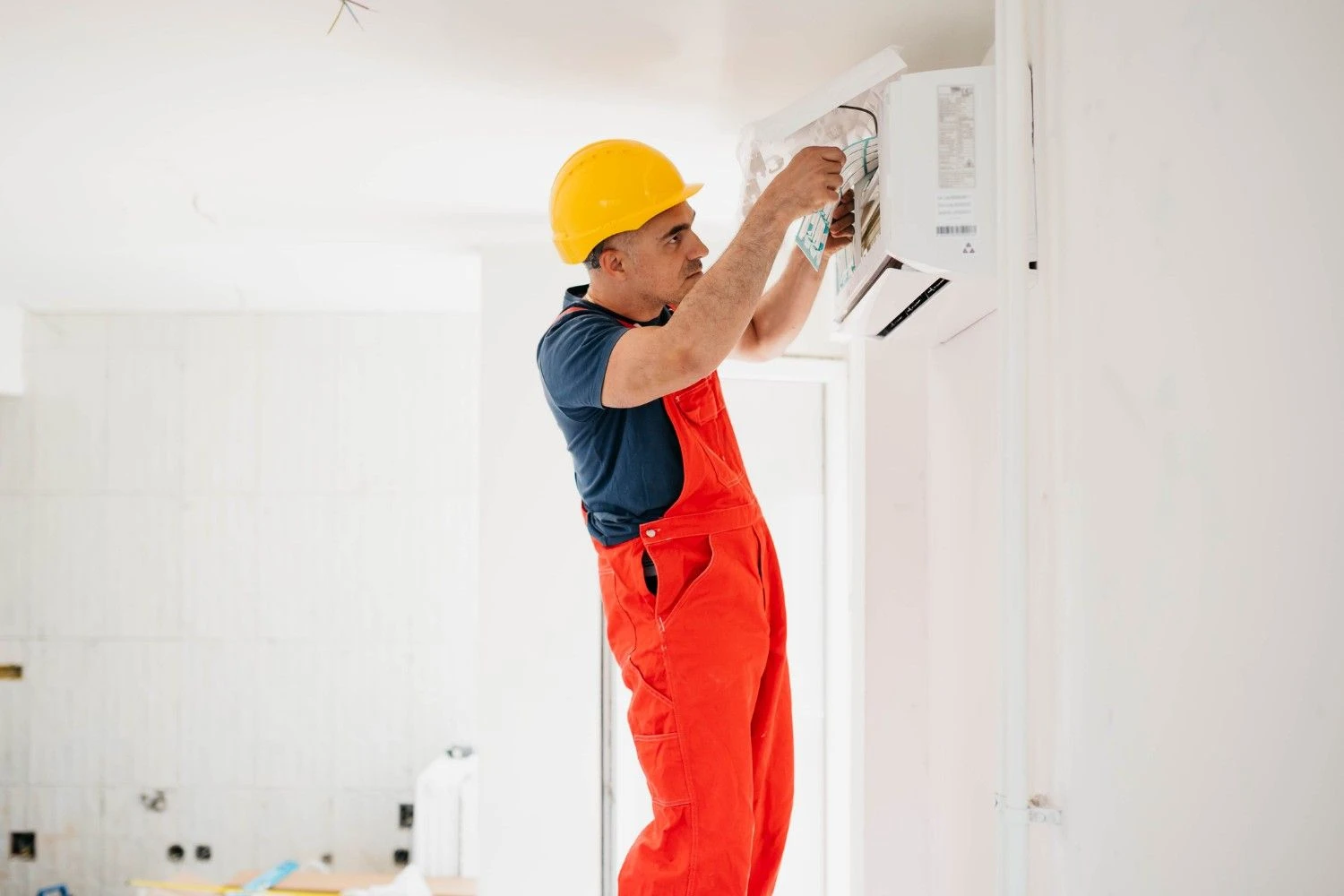
The Repair Process: From Arrival to Airflow
Understanding the repair workflow helps you prepare for the service visit. The process is designed to be non-intrusive while ensuring a thorough restoration of the system’s functionality. Unlike central HVAC repair, which often involves attic access, mini-split repairs are concentrated on the wall-mounted units and the exterior condenser.
Initial Assessment and Error Code Reading:
Technicians begin by checking the error codes displayed on the indoor unit or the outdoor control board. These codes provide a specific roadmap to the internal failure, whether it is a high-pressure lockout or a communication error.
Electrical and Mechanical Testing:
Once the error code is noted, the technician uses multimeters to test voltage inputs and outputs. They verify that the compressor is receiving the correct power and that the inverter board is modulating frequency correctly.
Pressure and Temperature Analysis:
Gauges are attached to the service ports to measure operating pressures. The technician compares these readings against the superheat and subcooling targets for the specific refrigerant type (usually R-410A) to confirm the system's thermodynamic efficiency.
Execution of Repairs:
After the problem is isolated and the quote is approved, the repair is performed. This may involve soldering a line set, replacing a capacitor, or flushing the drainage system.
System Testing and Cleanup:
The unit is run in maximum cooling and heating modes to ensure it ramps up correctly. The technician verifies that the temperature differential (split) between the intake and supply air is within the manufacturer's range. Finally, the work area is cleaned, and the system is wiped down.
When to Replace vs. Repair Your Mini-Split
Deciding between a repair and a full system replacement is a financial calculation based on the age of the unit, the cost of the repair, and the system's recent performance history. While ductless systems are durable, major component failures in older units often make replacement the more prudent economic choice.
The 50% Rule
A general guideline used in the industry is the 50% rule. If the cost of the repair approaches or exceeds 50% of the value of a new system, replacement is generally recommended. This is particularly true if the warranty on the existing unit has expired.
Critical Component Failure
If the compressor fails or the condenser coil has significant corrosion leading to multiple leaks, repair is rarely cost-effective. The compressor is the heart of the system; replacing it involves significant labor and parts costs that often rival the price of a new outdoor unit. Conversely, issues like failed sensors, bad capacitors, or clogged drain lines are almost always worth repairing.
Age and Refrigerant Type
Mini-splits generally last 15 to 20 years with proper maintenance. If your unit is over 12 years old and requires a major repair, investing that money into a modern, higher-efficiency system makes sense. Additionally, if you have an older system that utilizes R-22 refrigerant, repairs involving refrigerant handling are prohibitively expensive and environmentally restricted. Upgrading to a system using R-410A or newer refrigerants provides better efficiency and future-proofs your home.
Frequency of Breakdowns
If you have required repairs more than twice in the last two years, the system is likely reaching the end of its serviceable life. Frequent breakdowns indicate that internal components are wearing out simultaneously, and fixing one issue will likely be followed by another failure shortly after.
Navigating Local Requirements in Concord
Operating and repairing HVAC equipment in Concord requires adherence to specific local and state guidelines. The Mediterranean climate, characterized by hot, dry summers and wet winters, places a unique strain on cooling equipment, making compliance and proper setup essential for longevity.
Permitting and Title 24 Compliance
In California, significant alterations to HVAC systems, including the replacement of condensers or air handlers, may trigger Title 24 energy compliance standards. While minor repairs typically do not require a permit, replacing a compressor or a complete outdoor unit often does. This ensures the installation meets current energy efficiency ratings (SEER2/HSPF2). Professional technicians handle the documentation to ensure all work is code-compliant, preventing issues when you eventually sell your home.
Electrical Standards
Mini-splits require dedicated electrical circuits. During repairs, technicians verify that the existing wiring, disconnect boxes, and breakers meet Concord’s electrical safety codes. Older homes may have outdated wiring that cannot safely support the variable amperage drawn by modern inverter compressors. Identifying and rectifying these electrical bottlenecks is part of a comprehensive repair service.
Regional Climate Factors
The heat in this part of the East Bay can be intense, often exceeding 100 degrees Fahrenheit. This extreme heat increases the internal pressure within the mini-split system. Technicians account for this ambient temperature when charging refrigerant, as standard charts may not apply during a heatwave. Furthermore, the wet winters can lead to organic growth in the condensate lines. Local service protocols include aggressive treatment of drain lines to prevent mold and algae bloom common in this specific humidity profile.
Utility Incentives
Local utility providers often offer rebates or incentives for maintaining high-efficiency equipment. While repairs typically do not qualify for rebates, upgrading to a heat pump mini-split system often does. Technicians can advise on whether a repair keeps you aligned with energy-saving goals or if a replacement could unlock local rebates.
Professional Diagnostics and Technical Expertise
Effective mini-split repair requires more than general HVAC knowledge; it demands specific training on inverter technology and proprietary control logic. Standard air conditioning technicians may misdiagnose a communication error as a bad board when it is actually a wiring fault, leading to unnecessary expense.
Specialized Tooling:
Correct diagnosis requires digital manometers, specific micron gauges for vacuum testing, and adapters for ductless service ports. The service teams carry the specific proprietary diagnostic tools required for Mitsubishi, Daikin, Fujitsu, and other leading brands.
Inventory Availability:
Ductless systems use proprietary parts that are not interchangeable with standard A/C units. Service vehicles are stocked with the most common failure points—thermistors, flare nuts, and control wire—to ensure that most repairs can be completed without waiting for parts orders.
Transparent Communication:
You receive a clear explanation of what failed, why it failed, and how to prevent it from happening again. Whether it is a recommendation to trim back vegetation around the outdoor unit to improve airflow or advice on filter cleaning schedules, the goal is to leave you with a system that runs reliably for the long term.
Call Now
Restoring your home's cool air is the priority. With Jims Air Systems, you get a partner who understands the intricacies of ductless technology and the specific demands of the local climate. Do not let a small rattle turn into a compressor failure.
Stop sweating through the heat and get your system fixed today. Contact us now to schedule your repair service.

Your Trusted Local AC Experts
When the summer heat hits, you need an air conditioning system you can rely on. At Jim's Air Systems, we specialize in keeping your home cool and comfortable. Whether you need an emergency repair, a seasonal tune-up, or a brand new high-efficiency air conditioner, our family is here to help.
Our Air Conditioning Services include

AC Repair
We service all makes and models, quickly diagnosing and fixing any issue.
AC Installation & Replacement
Get a perfectly sized, high-efficiency system with our owner-led design and installation process.
AC Maintenance
Prevent breakdowns and improve efficiency with our comprehensive AC tune-ups.
Signs You Needs AC Service
.svg)
Ready for a Cooler, More Comfortable Home?
Whether you need an emergency repair or a free estimate on a new, energy-efficient air conditioner, our family is ready to provide honest advice and expert service. Contact us today!